What is Autism?
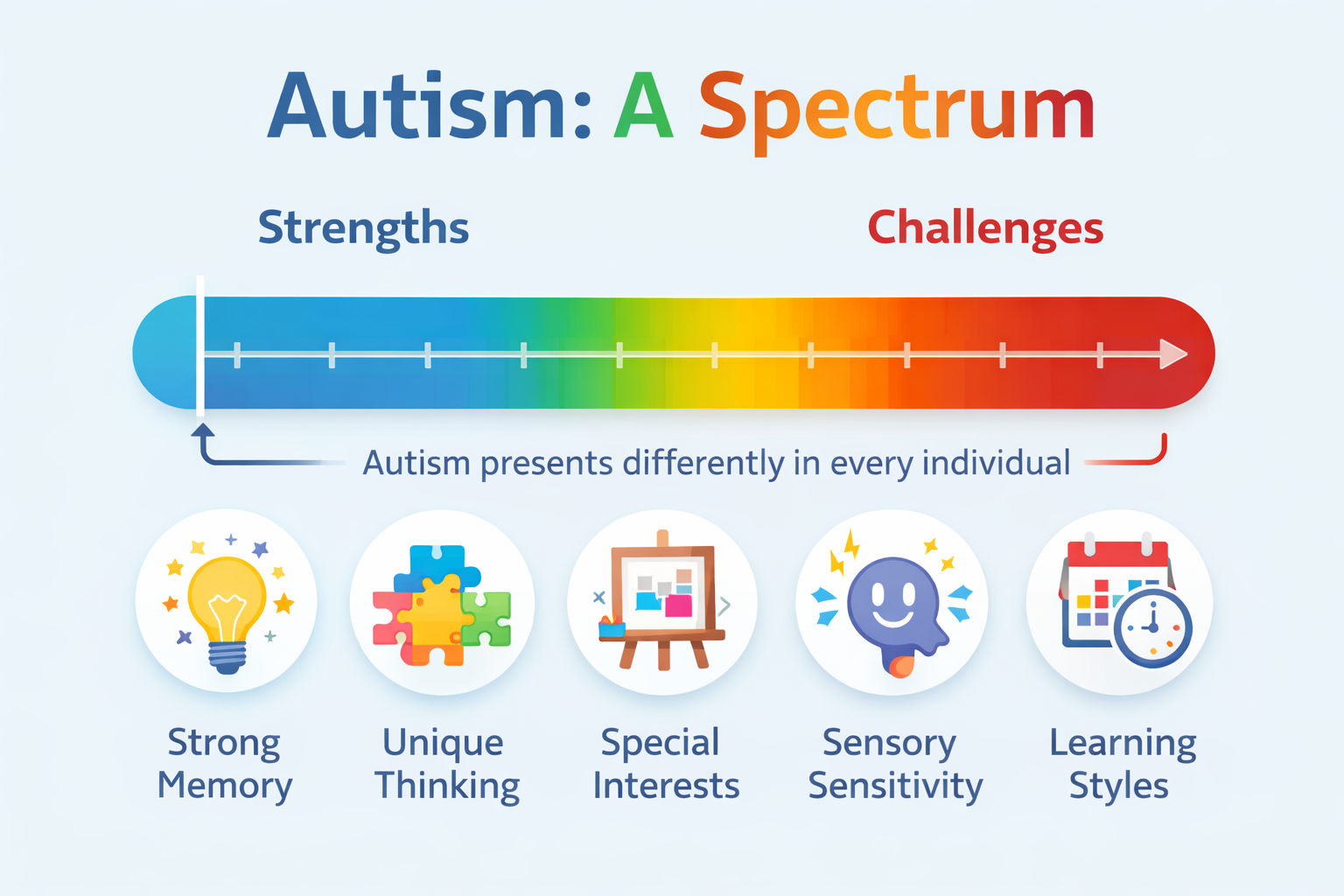
Autism, or Autism Spectrum Disorder (ASD), is a neurodevelopmental condition that affects how a person communicates, interacts socially, learns, and experiences the world around them.
It is called a “spectrum” because autism presents differently in every individual. Some children may have significant communication challenges, while others may be highly verbal but struggle with social interaction or sensory sensitivities.
Autism is not an illness. It is not something that “happens” later in life. It is a difference in brain development that begins early in childhood.
Children with autism may:
-
Have difficulty with eye contact
-
Prefer routines and struggle with changes
-
Show intense interest in specific topics
-
Be sensitive to sounds, textures, lights, or smells
-
Communicate differently (non-verbal, delayed speech, or unique language patterns)
-
Show repetitive behaviors like hand-flapping or rocking
But they may also:
-
Have exceptional memory
-
Be deeply honest and loyal
-
Excel in art, music, math, or technology
-
Think in unique, innovative ways
Autism is not a limitation of intelligence — many autistic individuals are highly intelligent and creative thinkers.
Is Autism a Disorder?
Medically, autism is classified as a neurodevelopmental disorder. However, many advocates prefer the term neurodivergent condition.
There are two important perspectives:
1. Medical Perspective
Autism is considered a disorder because it can cause challenges in:
-
Communication
-
Social skills
-
Daily functioning
-
Emotional regulation
Early diagnosis helps children receive therapy and support services.
2. Neurodiversity Perspective
The neurodiversity movement suggests:
-
Autism is a natural variation of the human brain.
-
It is not something “broken” that needs fixing.
-
Society should adapt to include neurodivergent individuals.
Both perspectives agree on one thing:
Autistic individuals deserve support, dignity, and respect.
Is Autism Curable?
This is one of the most common questions.
The honest answer is:
Autism is not a disease, so it does not need a cure.
Autism is a lifelong condition. However:
-
Early intervention can significantly improve communication and social skills.
-
Therapy can help children become more independent.
-
Support systems can improve quality of life.
The goal is not to “cure” autism.
The goal is to help individuals thrive in their own unique way.
Treatments focus on:
-
Social skills training
-
Parent training programs
With the right support, autistic individuals can:
-
Go to school
-
Have careers
-
Build relationships
-
Live fulfilling lives
What Causes Autism?
Research suggests autism may be influenced by:
-
Genetic factors
-
Differences in brain development
-
Environmental factors during pregnancy
What does NOT cause autism:
-
Vaccines (this myth has been scientifically disproven)
-
Bad parenting
-
Screen time alone
-
Lack of discipline
Understanding causes helps remove blame from parents and caregivers.
Common Myths About Autism
Autism is surrounded by misinformation. Let’s break down some major myths.
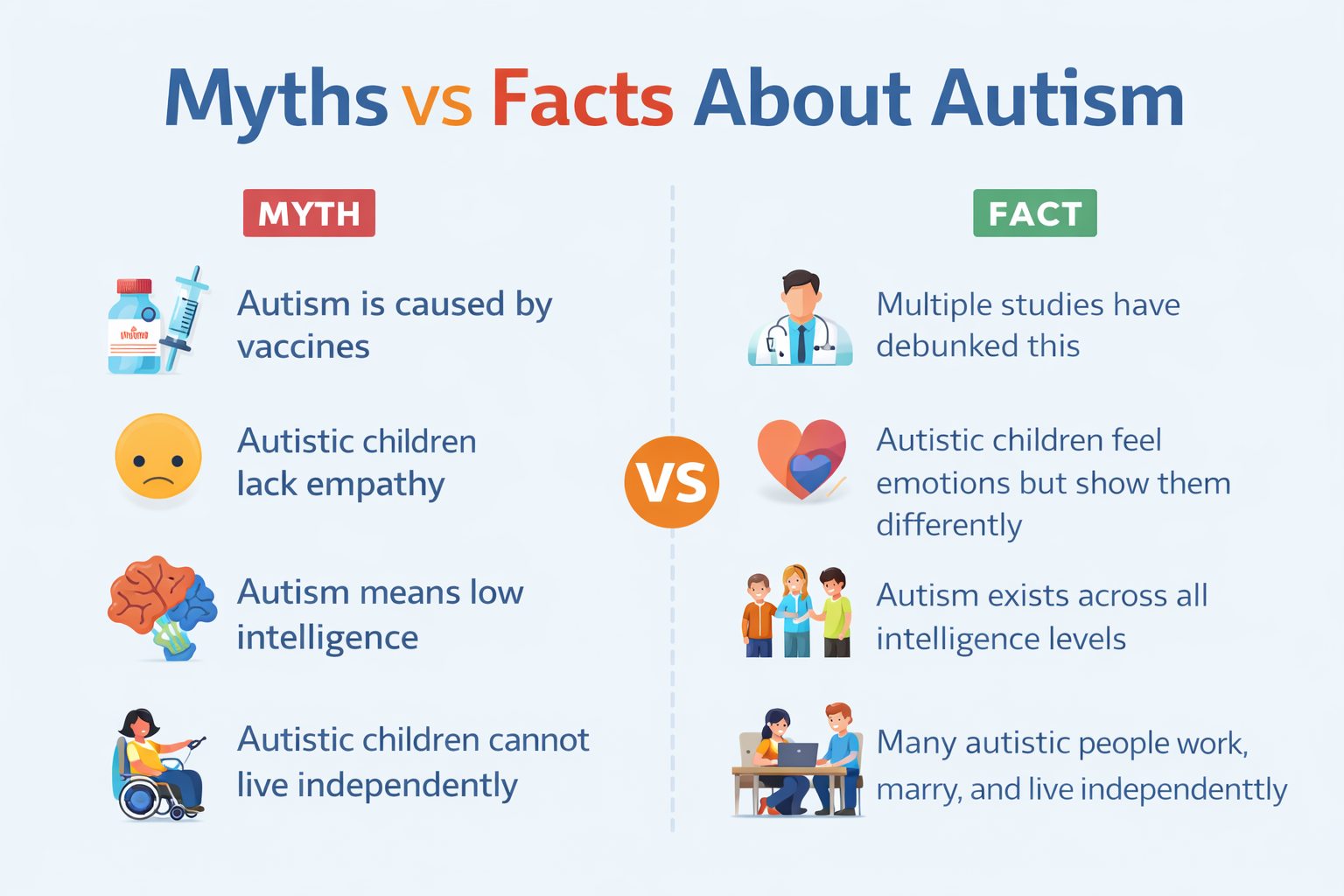
Myth 1: Autism is Caused by Vaccines
This myth started from a fraudulent study that has been completely discredited. Multiple global studies have confirmed:
Vaccines do NOT cause autism.
Myth 2: Autistic Children Lack Emotions
Reality:
Autistic children feel emotions deeply. They may just express them differently.
Some struggle with understanding facial expressions or social cues — but that does not mean they lack empathy.
Myth 3: Autism Means Low Intelligence
Truth:
Autism exists across all intelligence levels. Some individuals have intellectual disabilities, but many have average or above-average intelligence.
Myth 4: Autism is Rare
Autism is more common than people think. Increased awareness and better diagnosis have helped identify more children early.
Myth 5: Autistic Children Cannot Live Independently
Many autistic adults:
-
Work in tech, arts, science, education
-
Live independently
-
Build families
-
Contribute meaningfully to society
How Aar-Tas International School of Autism Solves This Problem
Aar-Tas International School of Autism is dedicated to empowering children on the autism spectrum through structured, compassionate, and personalized intervention programs. The school focuses on understanding each child’s unique strengths and challenges while providing specialized educational and therapeutic support.
Unlike traditional systems that try to “fit” autistic children into standard methods, Aar-Tas International School of Autism designs its approach around the child.
1. Early Identification and Assessment
Aar-Tas emphasizes the importance of early screening and developmental assessment. Early identification allows:
-
Faster intervention
-
Better communication outcomes
-
Improved social development
-
Stronger adaptive skills
The school conducts structured evaluations to understand each child’s sensory profile, communication level, and behavioral patterns before designing a customized support plan.
2. Individualized Education Plans (IEPs)
Every child at Aar-Tas receives a personalized intervention plan tailored to their needs. These plans focus on:
-
Communication development
-
Social interaction skills
-
Emotional regulation
-
Daily living skills
-
Academic readiness
By focusing on individual progress instead of comparison, children grow at their own pace in a supportive environment.
3. Specialized Therapy Integration
Aar-Tas International School of Autism integrates multiple evidence-based therapies, which may include:
-
Speech and language therapy
-
Occupational therapy
-
Behavioral intervention strategies
-
Sensory integration support
-
Social skills training
Therapies are structured but delivered with empathy, ensuring children feel safe and understood.
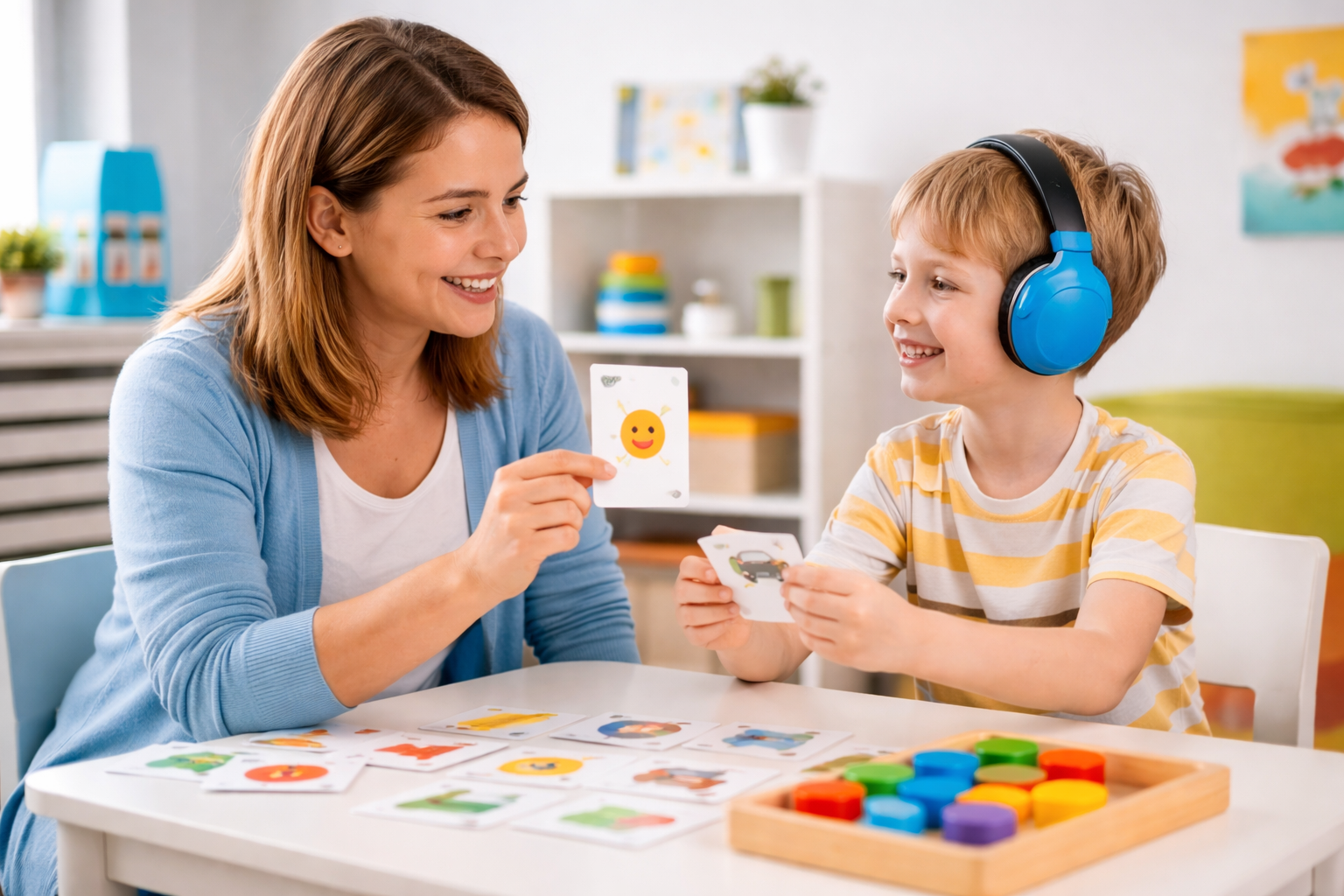
4. Sensory-Friendly Learning Environment
Many autistic children experience sensory sensitivities. Aar-Tas creates:
-
Calm and structured classrooms
-
Predictable daily routines
-
Visual schedules
-
Safe sensory spaces
This reduces anxiety and helps children focus better.
5. Parent Training and Family Support
Aar-Tas understands that autism support does not end at school. Parents are guided through:
-
Behavior management strategies
-
Communication techniques
-
Creating structured home routines
-
Supporting emotional development
When parents and educators work together, children progress more effectively.
6. Strength-Based Development
Rather than focusing only on challenges, Aar-Tas identifies and nurtures each child’s strengths. Whether it is art, memory skills, numbers, music, or technology — strengths are encouraged to build confidence and self-worth.
7. Community Awareness and Inclusion
Beyond therapy and academics, Aar-Tas International School of Autism promotes social acceptance through:
-
Awareness programs
-
Inclusive activities
-
Community engagement initiatives
-
Educator training workshops
The goal is not just intervention — it is integration.
The Core Philosophy
Aar-Tas International School of Autism believes:
Autism is not something to “fix.”
It is something to understand, support, and embrace.
By combining structured intervention, compassionate teaching, family involvement, and community awareness, Aar-Tas helps autistic children develop independence, confidence, and life skills — while honoring who they truly are.
Why Acceptance Matters More Than Cure
Acceptance changes everything.
When society focuses only on “fixing” autism, it sends a harmful message:
“You are not okay as you are.”
Instead, we must say:
“You are different, and that difference is valuable.”
Acceptance means:
-
Listening without judgment
-
Adapting environments
-
Respecting sensory boundaries
-
Using inclusive language
Children who are accepted:
-
Develop higher self-esteem
-
Experience less anxiety
-
Perform better academically
-
Build healthier relationships
How Society Can Accept and Support Autistic Children
Acceptance starts at home and expands outward.
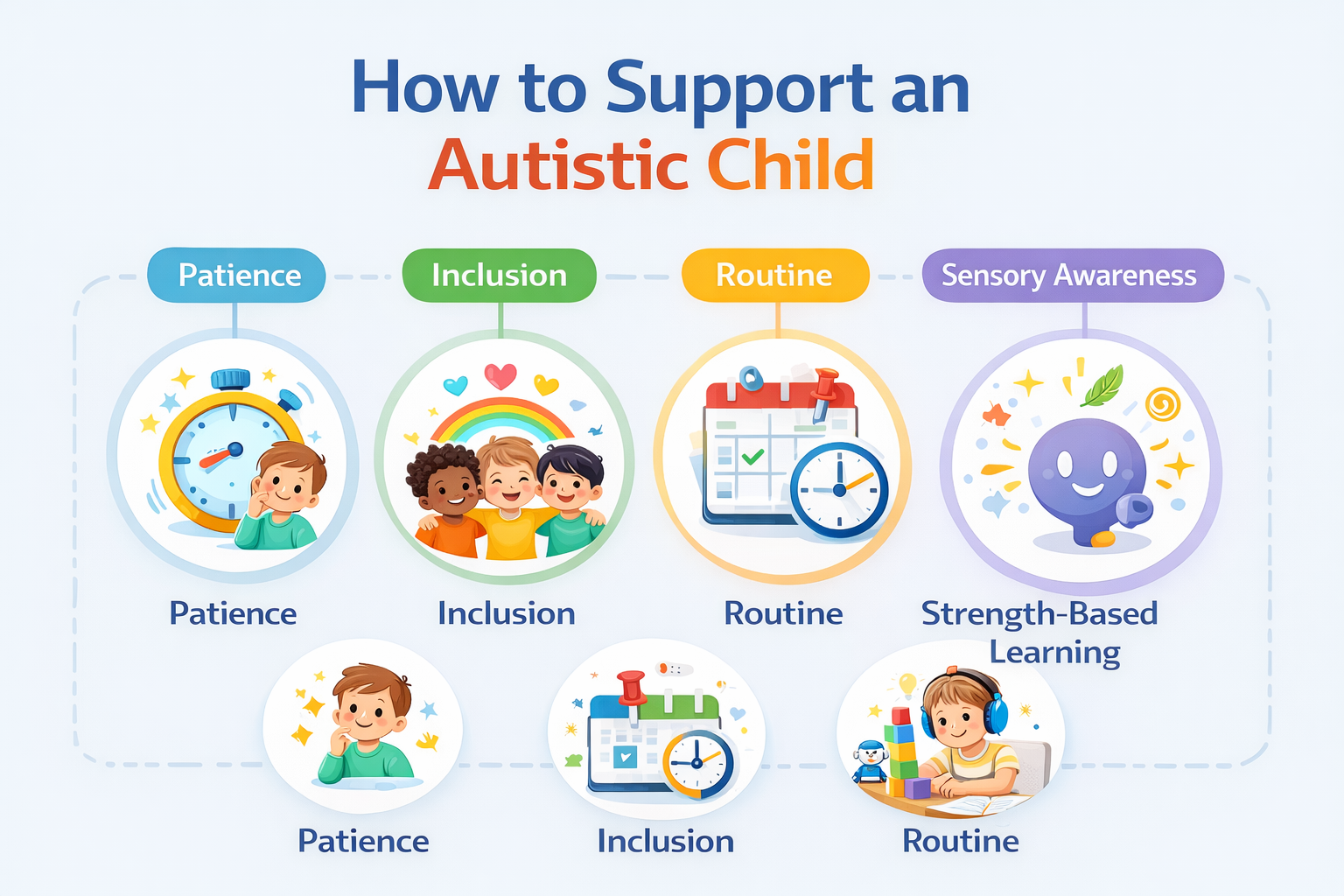
1. Educate Yourself
Learn:
-
What autism truly is
-
How sensory overload feels
-
Why routines matter
-
How communication differences work
Understanding reduces fear and stigma.
2. Stop Labeling as “Difficult” or “Naughty”
Meltdowns are not tantrums.
They are often sensory or emotional overload responses.
Instead of punishment, offer:
-
Calm space
-
Reduced noise
-
Gentle communication
3. Promote Inclusive Education
Schools can:
-
Provide sensory-friendly classrooms
-
Allow flexible seating
-
Use visual schedules
-
Offer peer support programs
Inclusion teaches neurotypical children empathy and respect.
4. Respect Communication Differences
Some children:
-
Use assistive communication devices
-
Prefer minimal eye contact
-
Need extra processing time
Patience is powerful.
5. Encourage Strength-Based Development
Instead of focusing on “weaknesses,” build on strengths:
-
Art
-
Coding
-
Music
-
Math
-
Memory skills
Confidence grows when strengths are recognized.
The Emotional Journey of Parents
Parents of autistic children often experience:
-
Confusion
-
Guilt
-
Fear
-
Social isolation
-
Financial stress
They need support too.
Community can help by:
-
Avoiding blame
-
Offering practical assistance
-
Being understanding during public meltdowns
-
Including families in social events
The Power of Early Intervention
Research consistently shows:
Early support leads to:
-
Better communication skills
-
Improved independence
-
Stronger adaptive behaviors
-
Reduced long-term challenges
Signs parents should watch for:
-
Delayed speech
-
Lack of response to name
-
Limited eye contact
-
Repetitive movements
-
Intense focus on specific objects
Early action makes a lifelong difference.
Autism and Strength: A Different Way of Thinking
Many innovations have come from neurodivergent thinkers.
Autistic individuals may:
-
Notice patterns others miss
-
Focus deeply for long periods
-
Think logically and analytically
-
Be incredibly honest and detail-oriented
Society benefits from neurodiversity.
Moving From Awareness to Acceptance
Awareness says:
“Autism exists.”
Acceptance says:
“Autistic individuals belong.”
Inclusion says:
“We will change systems to support them.”
Real progress requires:
-
Policy changes
-
Workplace inclusion
-
Teacher training
-
Accessible public spaces
-
Positive media representation
Conclusion
Autism is not a tragedy.
Lack of understanding is.
Autism is not something to erase.
It is something to understand.
Autistic children do not need to become someone else.
They need support to become their best selves.
Programs like AR-TAS play an important role by:
-
Providing structured intervention
-
Empowering parents
-
Promoting community awareness
-
Supporting lifelong development
But the most powerful change comes from society’s mindset.
When we shift from:
“Why is this child different?”
To:
“How can we make space for this child?”
We create a world where every child — autistic or not — feels valued, respected, and loved.