Autism Spectrum Disorder (ASD) affects communication, social interaction, and behavior. Among children on the spectrum, some are non-verbal or minimally verbal, meaning they struggle significantly with spoken language. Early speech and language intervention is often critical. But what happens when a Speech and Language Pathologist (SLP) is not available?
For many families, especially in developing regions, access to specialized speech therapists can be limited. This absence can deeply impact a child’s communication development, emotional growth, and family confidence.
However, institutions like Aar-Tas International School of Autism are transforming this reality. Through their DDTC-based approach and COSMI-certified therapists, they provide structured, stage-by-stage communication intervention that empowers children and restores hope in parents.
Let’s explore:
-
The impact of missing speech therapy
-
The challenges faced by non-verbal autism children
-
The role of DDTC and COSMI-certified therapists
-
How Aar-Tas creates measurable progress
-
Why parents feel proud to be part of the Aar-Tas journey
Understanding Non-Verbal Autism
A non-verbal autism child may:
-
Use very few words or no words
-
Struggle to express needs
-
Rely on gestures, sounds, or behaviors
-
Experience frustration due to communication barriers
It is important to note that non-verbal does not mean unintelligent. Many children understand far more than they can express.
What Happens When There Is No Speech and Language Pathologist?
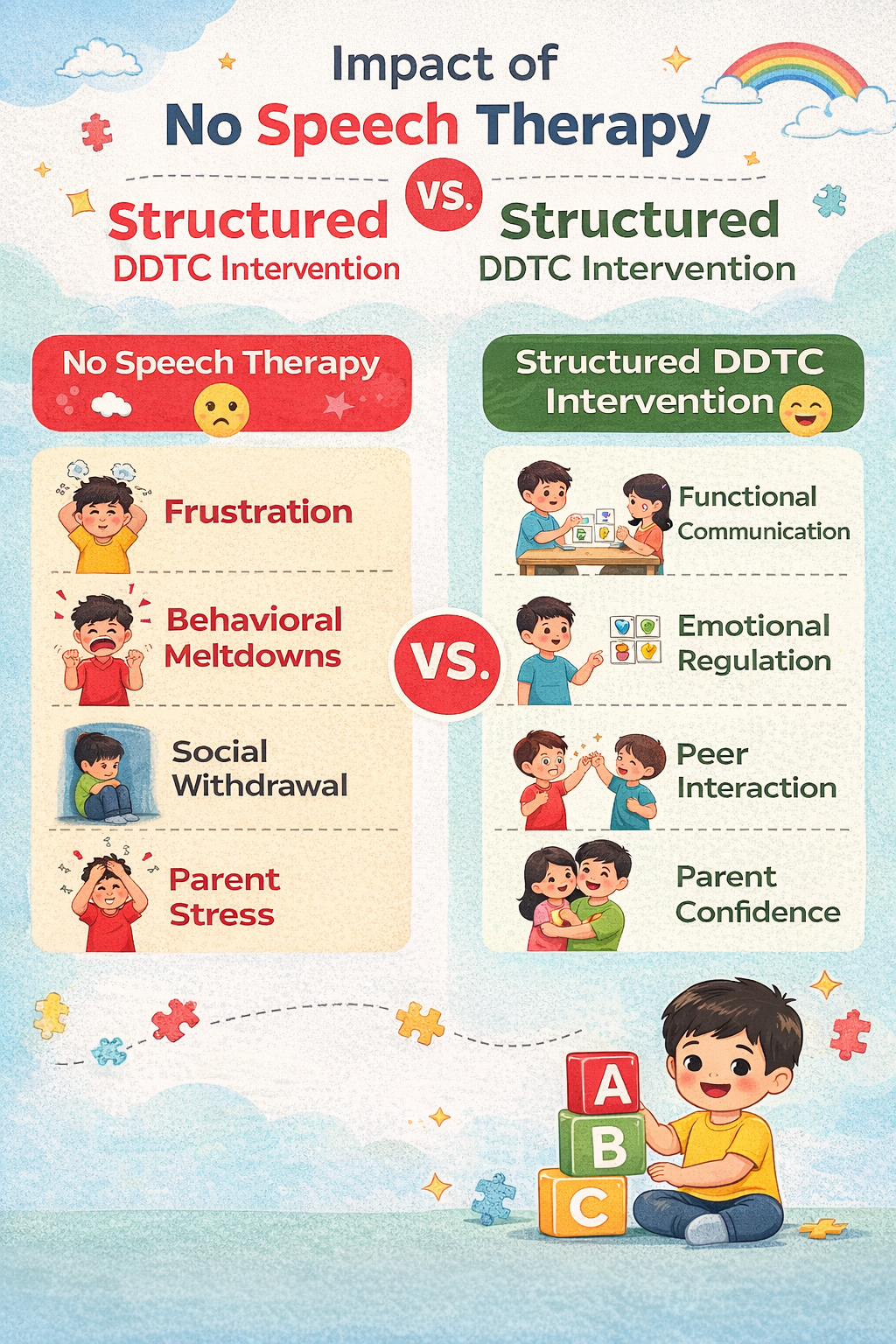
When a speech therapist is unavailable, the consequences may include:
1. Delayed Communication Development
Without professional guidance, children may not develop:
-
Functional communication skills
-
Vocabulary building
-
Sentence formation
-
Social language use
2. Increased Behavioral Challenges
When a child cannot express needs:
-
Tantrums increase
-
Aggression may develop
-
Self-injurious behaviors may appear
-
Withdrawal from interaction becomes common
Behavior is often communication. Without tools, frustration grows.
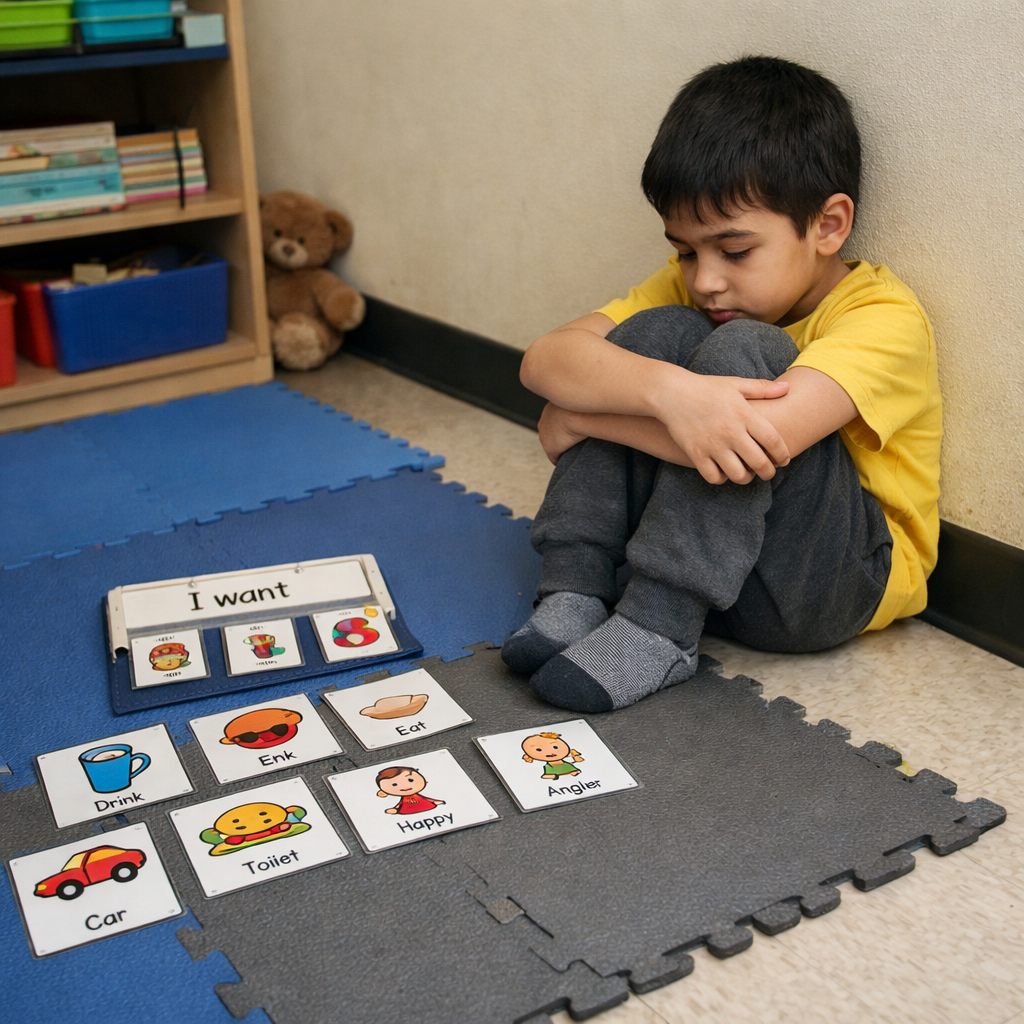
3. Emotional Impact on the Child
Children may feel:
-
Isolated
-
Misunderstood
-
Anxious
-
Low self-confidence
Over time, lack of communication opportunities affects emotional regulation and social bonding.
4. Stress and Guilt in Parents
Parents often experience:
-
Anxiety about their child’s future
-
Guilt for not accessing therapy
-
Social stigma
-
Emotional burnout
Many parents say, “We just want our child to say ‘Mama’ or ‘Papa.’”
The absence of a speech pathologist creates fear about whether that moment will ever come.
The Critical Window: Why Early Communication Support Matters
Research shows that early intervention (ages 2–6) significantly improves outcomes in children with autism.
Key benefits include:
-
Stronger neural pathways
-
Better social adaptation
-
Reduced behavioral issues
-
Increased independence
But if speech therapists are unavailable, what alternatives exist?
This is where Aar-Tas International School of Autism plays a transformative role.
How Aar-Tas International School of Autism Overcomes This Challenge
Aar-Tas understands that communication is more than speech. It is about connection.
Instead of waiting for traditional speech therapy availability, Aar-Tas integrates communication development through:
-
DDTC (Developmental, Dynamic, Therapeutic Communication) approach
-
COSMI-certified therapists
-
Multisensory learning
-
Structured stage-based progression
-
Parent involvement programs
What Is DDTC and Why Is It Effective?
DDTC focuses on:
-
Developmental readiness
-
Emotional bonding
-
Sensory integration
-
Gradual speech stimulation
-
Functional communication skills
Rather than forcing speech, DDTC builds the foundation first.
📊 Suggested Infographic Placement
Stage-by-Stage Progress at Aar-Tas
One of the strengths of Aar-Tas is its structured, stage-based improvement model.
Let’s explore how a non-verbal child progresses.
Stage 1: Sensory Regulation & Trust Building
Before speech, there must be regulation.
Therapists focus on:
-
Eye contact
-
Joint attention
-
Sensory balance
-
Emotional comfort
Children begin responding to their name.
They start tolerating interaction.
This is the foundation of communication.
Stage 2: Non-Verbal Communication Skills
Children are introduced to:
-
Picture Exchange Communication System (PECS)
-
Gesture imitation
-
Sign cues
-
Visual schedules
At this stage:
-
Tantrums reduce
-
Children point or gesture for needs
-
Parents feel relief
Communication begins — even without words.

COSMI-certified therapist helping non-verbal autism child with visual communication tools
Stage 3: Sound Production & Vocal Imitation
Now that emotional and sensory foundations are stable:
-
Therapists encourage vowel sounds
-
Imitation of simple syllables
-
Play-based vocal stimulation
-
Rhythmic speech exercises
Even producing “aaa” or “mmm” is celebrated.
Every sound matters.
Stage 4: Word Formation
With consistent DDTC intervention:
-
Children begin forming single words
-
Functional vocabulary develops (water, mom, go)
-
Response to simple questions improves
Parents often experience the emotional milestone here.
The first word.
Stage 5: Functional Communication & Social Interaction
The focus shifts to:
-
Two-word combinations
-
Expressing feelings
-
Answering simple questions
-
Peer interaction
Children who once sat alone now join group activities.
Confidence grows.

The Role of COSMI-Certified Therapists
Aar-Tas therapists are COSMI-certified, meaning they are trained in:
-
Structured autism intervention
-
Sensory-motor integration
-
Communication development
-
Parent-guided therapy models
-
Behavioral understanding
They do not just teach speech.
They build communication ecosystems.
This holistic approach ensures:
-
Consistency
-
Scientific methodology
-
Emotional sensitivity
-
Measurable progress tracking
How Parents Transform During the Journey
At the beginning, many parents arrive with:
-
Fear
-
Exhaustion
-
Doubt
-
Social embarrassment
But as therapy progresses:
-
Parents learn communication strategies
-
They practice structured interaction at home
-
They see visible progress
-
They regain hope
One parent shared:
“We came to Aar-Tas with silence. Today, our child calls us with words. We are proud parents of an autism child.”
This transformation is not just in the child.
It is in the entire family.
Building Parent Confidence
Aar-Tas involves parents through:
-
Monthly progress reviews
-
Home-training sessions
-
Counseling support
-
Skill reinforcement workshops
When parents understand autism, fear reduces.
When they see progress, pride replaces anxiety.

Why Aar-Tas International School of Autism Stands Out
✔ Integrated DDTC model
✔ COSMI-certified therapists
✔ Structured stage-based intervention
✔ Focus on communication, not just speech
✔ Parent empowerment
✔ Safe and supportive environment
Aar-Tas believes:
Every child can communicate. The method just needs to match the child.
Frequently Asked Questions (AEO Optimized Section)
Q1: Can a non-verbal autism child learn to speak?
Yes, many non-verbal autism children can develop speech with structured early intervention and consistent communication therapy.
Q2: What happens if speech therapy is delayed?
Delayed therapy may lead to increased behavioral challenges, emotional frustration, and slower communication development.
Q3: How does Aar-Tas help without a traditional speech pathologist?
Aar-Tas uses DDTC methodology and COSMI-certified therapists to build foundational communication skills before advancing to speech.
Q4: At what age should autism communication therapy begin?
Early intervention between ages 2–6 offers the best developmental outcomes.
The Emotional Victory: More Than Words
When a child says their first word:
It is not just speech.
It is connection.
It is independence.
It is dignity.
And when parents hear it:
It is pride.
It is relief.
It is validation.
Aar-Tas International School of Autism is not just building speech — it is building futures.
Final Thoughts
The absence of a Speech and Language Pathologist can create serious developmental gaps for non-verbal autism children. However, with structured intervention models like DDTC and the expertise of COSMI-certified therapists, communication development is still possible.
At Aar-Tas International School of Autism:
-
Silence turns into sound.
-
Frustration turns into expression.
-
Fear turns into pride.
Every child deserves a voice.
And every parent deserves hope.