
A Small Story to Begin…
When 4-year-old Arjun first walked into a classroom, the world felt too loud, too bright, and too overwhelming. The buzzing lights made him cover his ears. The texture of crayons bothered him. He struggled to hold a pencil. Other children played together, but he preferred sitting alone.
His parents wondered:
-
Why does he avoid touch?
-
Why can’t he focus?
-
Why is he struggling with basic activities like dressing or eating independently?
The answer led them to Occupational Therapy (OT) — a life-changing intervention for children with Autism Spectrum Disorder (ASD).
This blog will help you understand:
-
What Occupational Therapy is
-
Why OT is important for autism
-
The disadvantages children may face without OT
-
Whether OT includes sensory integration
-
How Aar-Tas International School of Autism uses specialized OT therapy to transform lives
What Is Occupational Therapy?

Occupational Therapy (OT) is a therapeutic approach that helps individuals develop, improve, and maintain the skills needed for daily living and independence.
For children, especially those with Autism Spectrum Disorder, OT focuses on:
-
Fine motor skills development
-
Gross motor coordination
-
Sensory processing skills
-
Self-care skills (dressing, eating, grooming)
-
Social interaction abilities
-
Attention and focus
In simple words:
Occupational Therapy helps children do everyday activities with confidence and independence.
For autism, OT is not just therapy — it is a bridge to functional living.
Why Is Occupational Therapy Important for Autism?
Children with autism often experience challenges in:
-
Sensory processing
-
Motor planning
-
Emotional regulation
-
Communication
-
Social participation
-
Adaptive behavior
Without structured intervention like Pediatric Occupational Therapy, these challenges may increase as the child grows.
1. Improves Sensory Processing
Many children with autism are either:
-
Hypersensitive (over-sensitive to sounds, lights, touch)
-
Hyposensitive (under-responsive and seeking intense sensory input)
OT helps regulate these responses through structured activities.
2. Builds Independence
OT teaches essential life skills like:
-
Buttoning shirts
-
Using spoons
-
Holding pencils
-
Managing school routines
These skills directly impact a child’s academic and social life.
3. Enhances Focus and Learning
A regulated sensory system improves:
-
Attention span
-
Classroom participation
-
Emotional stability
4. Supports Emotional Regulation
Occupational therapists use calming strategies and sensory tools to help children manage meltdowns and anxiety.
What Happens Without Occupational Therapy?
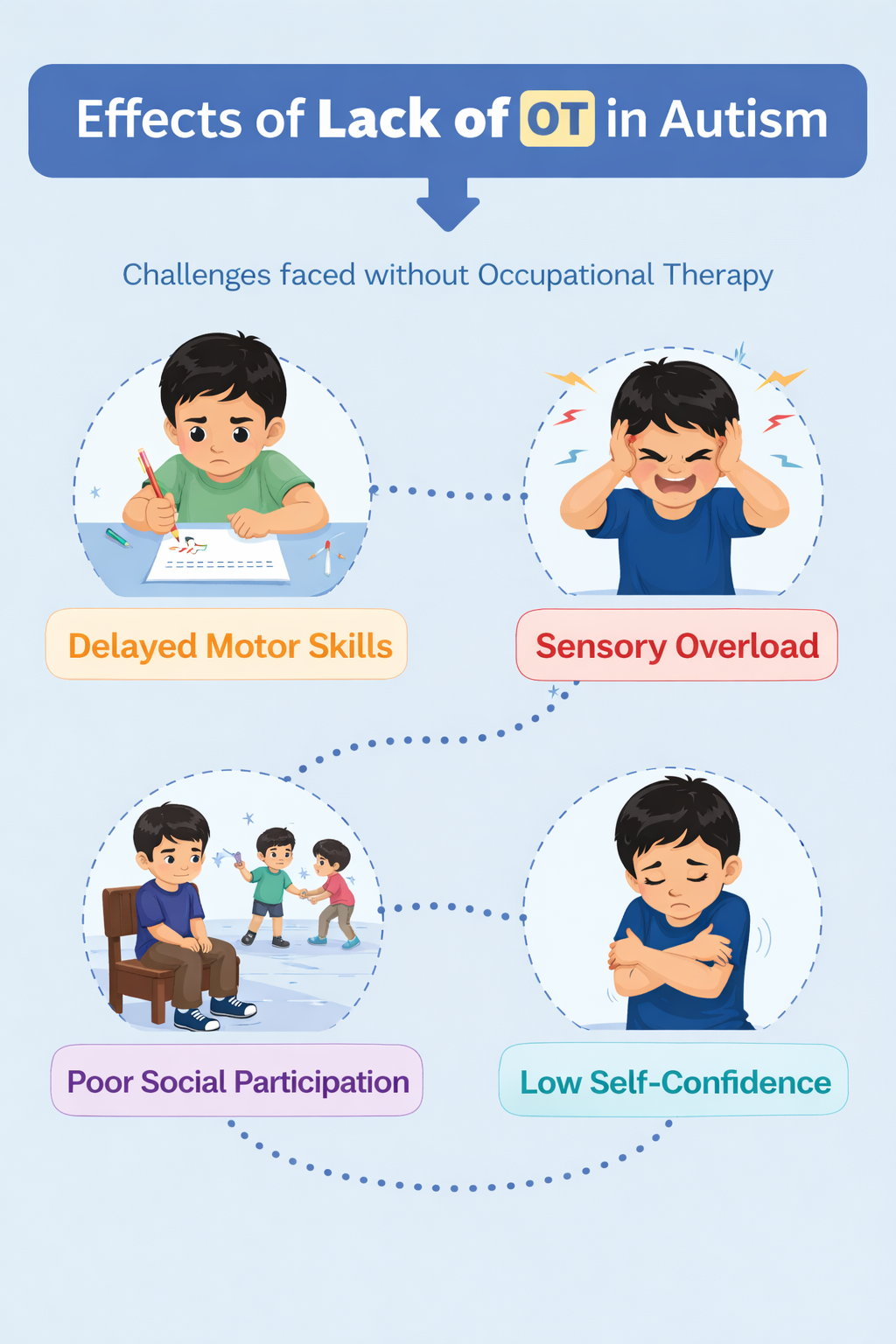
If children with autism do not receive Occupational Therapy intervention, they may experience:
1. Delayed Motor Skills
-
Difficulty holding pencils
-
Poor handwriting
-
Weak hand strength
-
Clumsiness
2. Severe Sensory Challenges
-
Frequent meltdowns
-
Avoidance of touch
-
Extreme reactions to sound
-
Difficulty tolerating school environments
3. Reduced Independence
Without OT support, children may:
-
Depend on parents for dressing
-
Struggle with feeding
-
Avoid peer interaction
4. Social Isolation
Sensory and motor difficulties often limit:
-
Playground participation
-
Group activities
-
Classroom engagement
5. Lower Self-Confidence
When a child constantly struggles with basic tasks, it affects emotional development and self-esteem.
Early intervention through Autism Occupational Therapy services can prevent long-term developmental gaps.
Does Occupational Therapy Include Sensory Integration?
Yes — absolutely.
One of the most important components of OT for autism is Sensory Integration Therapy.
![Image: Sensory integration therapy room with swings, therapy balls, balance boards]
What Is Sensory Integration Therapy?
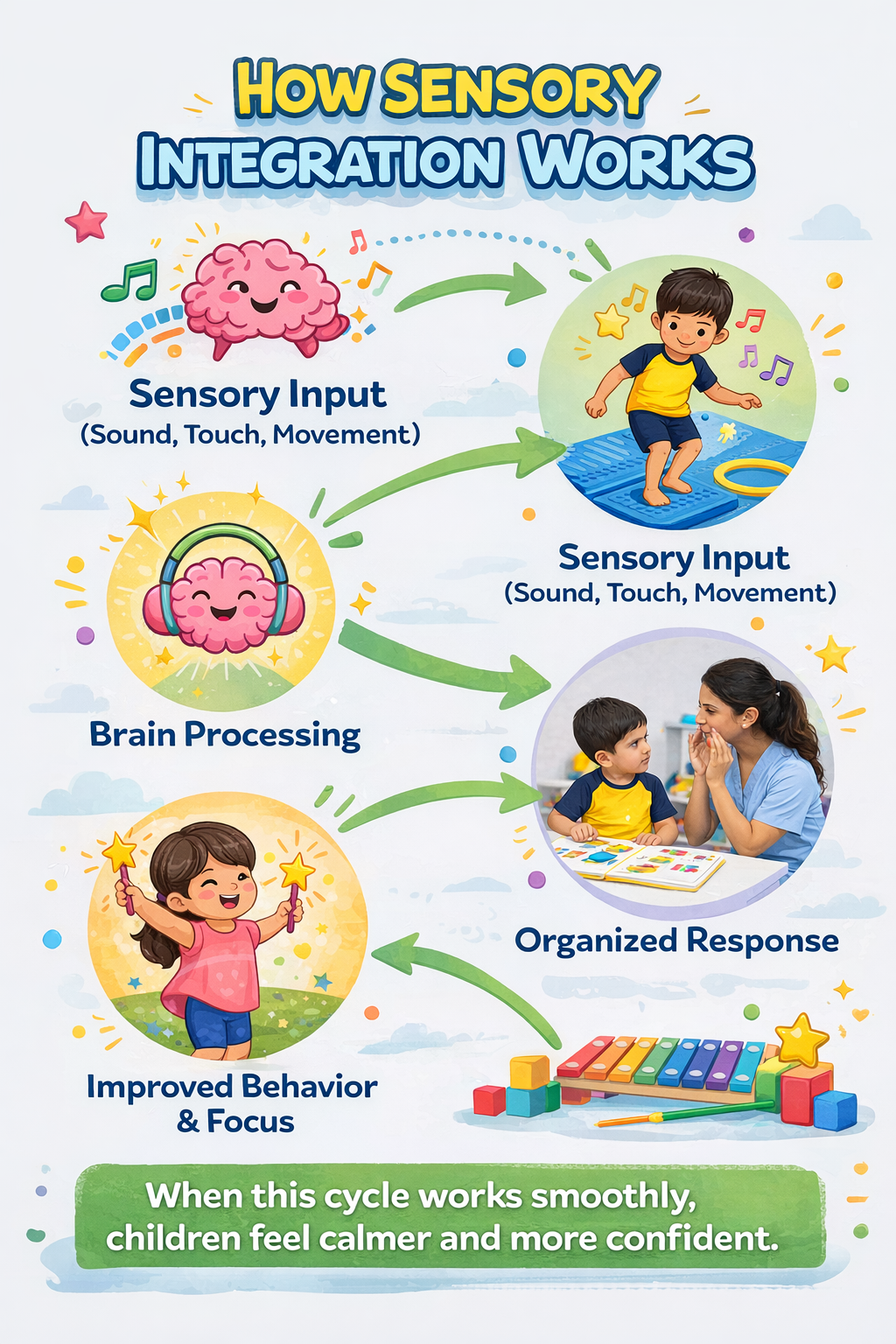
Sensory Integration Therapy helps children process and respond to sensory information appropriately.
Children with autism may struggle to process:
-
Touch
-
Sound
-
Sight
-
Smell
-
Movement
-
Body awareness
Through carefully designed activities like:
-
Swing therapy
-
Deep pressure activities
-
Balance exercises
-
Tactile play
-
Obstacle courses
Occupational therapists help the brain organize sensory input more effectively.
How Aar-Tas International School of Autism Came into the Picture
When parents like Arjun’s search for answers, they don’t just need therapy — they need a structured, holistic environment.
That’s where Aar-Tas International School of Autism plays a transformative role.
Aar-Tas recognized a growing need:
Children with autism require not only academic learning but specialized therapeutic intervention integrated into their daily routine.
Instead of separating therapy and schooling, Aar-Tas integrates Occupational Therapy for Autism within the educational framework.
How Aar-Tas International School of Autism Solves the Problem Using Different OT Therapies
Aar-Tas uses a multi-disciplinary and personalized OT approach that includes:
1. Individualized Occupational Therapy Plans
Each child undergoes:
-
Detailed sensory assessment
-
Motor skill evaluation
-
Functional skill observation
Based on this, therapists design customized Occupational Therapy programs tailored to the child’s needs.
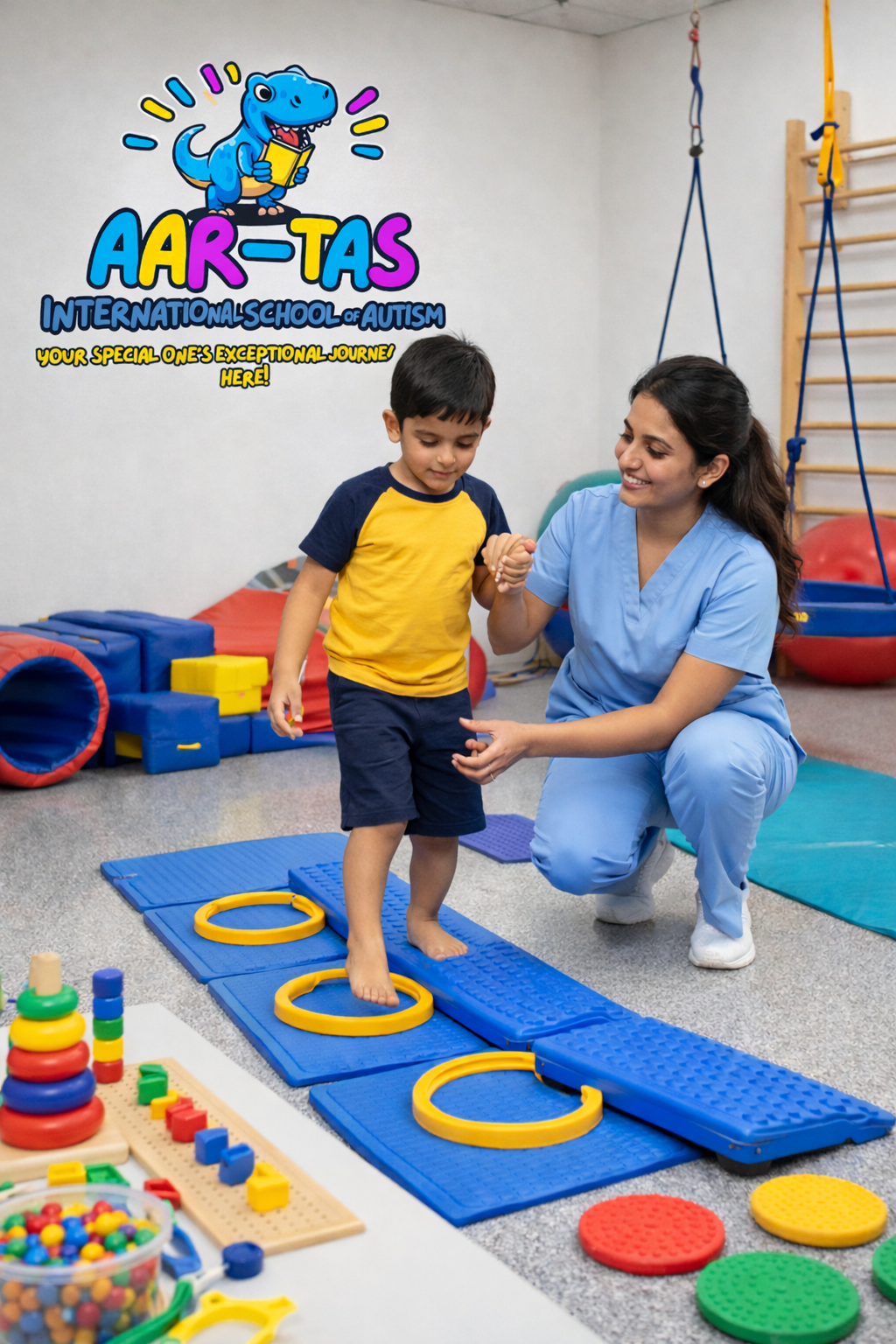
2. Sensory Integration Therapy Rooms
Aar-Tas provides specialized sensory rooms equipped with:
-
Therapy swings
-
Weighted blankets
-
Balance boards
-
Tactile walls
-
Sensory mats
These tools help regulate sensory processing challenges in children with Autism Spectrum Disorder.
3. Fine Motor Skills Development Programs
Children receive structured activities like:
-
Bead stringing
-
Hand strengthening exercises
-
Pencil grip training
-
Visual-motor coordination games
This improves:
-
Handwriting
-
Classroom readiness
-
Academic participation
4. Gross Motor and Body Coordination Therapy
Through structured physical therapy-based OT:
-
Core strength improves
-
Balance increases
-
Motor planning becomes smoother
This boosts confidence during playground and group activities.
5. Activities of Daily Living (ADL) Training
Aar-Tas focuses heavily on independence skills:
-
Dressing practice
-
Feeding therapy
-
Grooming routines
-
Classroom self-management
This empowers children to function independently at home and school.
6. Emotional and Behavioral Regulation Strategies
Using sensory diets and structured routines, Aar-Tas helps children:
-
Reduce meltdowns
-
Improve focus
-
Enhance social interaction
The Transformation: From Overwhelmed to Empowered
Let’s return to Arjun.
After consistent Occupational Therapy sessions at Aar-Tas International School of Autism:
-
He tolerates classroom noise better.
-
He holds a pencil properly.
-
He participates in group activities.
-
He dresses independently.
His parents no longer see confusion in his eyes — they see confidence.
That is the power of structured Pediatric Occupational Therapy.
Why Early Occupational Therapy Intervention Matters
Research consistently shows:
-
Early OT intervention improves long-term independence
-
Sensory integration therapy enhances cognitive development
-
Structured Autism therapy programs reduce behavioral challenges
The earlier a child receives OT support, the better their developmental outcomes.
Why Occupational Therapy Is Essential for Autism
If you are searching for:
-
Best Occupational Therapy for Autism
-
Sensory Integration Therapy for children
-
Pediatric OT services
-
Autism Spectrum Disorder therapy
-
Fine motor skills therapy for autism
-
OT schools for autism
A structured institution like Aar-Tas International School of Autism offers integrated solutions combining education and therapy under one roof.
Frequently Asked Questions
Is Occupational Therapy only for severe autism?
No. OT benefits children across all levels of Autism Spectrum Disorder.
How long does OT take to show results?
Progress depends on:
-
Early intervention
-
Consistency
-
Individual needs
However, gradual improvement is often visible within months.
Is sensory integration scientifically supported?
Yes. Sensory-based Occupational Therapy is widely used in autism intervention programs worldwide.
Final Thoughts: More Than Therapy — It’s a Lifeline
Occupational Therapy is not just about exercises.
It is about:
-
A child tying their own shoelaces
-
A child writing their first sentence
-
A child playing with friends confidently
-
A child feeling understood
Without OT, many children with autism struggle silently.
With the right intervention — especially through institutions like Aar-Tas International School of Autism — children don’t just cope.
They thrive.
If your child shows signs of:
-
Sensory sensitivity
-
Delayed motor skills
-
Difficulty with daily activities
-
Social withdrawal
Early Occupational Therapy for Autism can make a life-changing difference.
Explore structured, professional intervention programs at Aar-Tas International School of Autism and take the first step toward empowering your child’s future.